

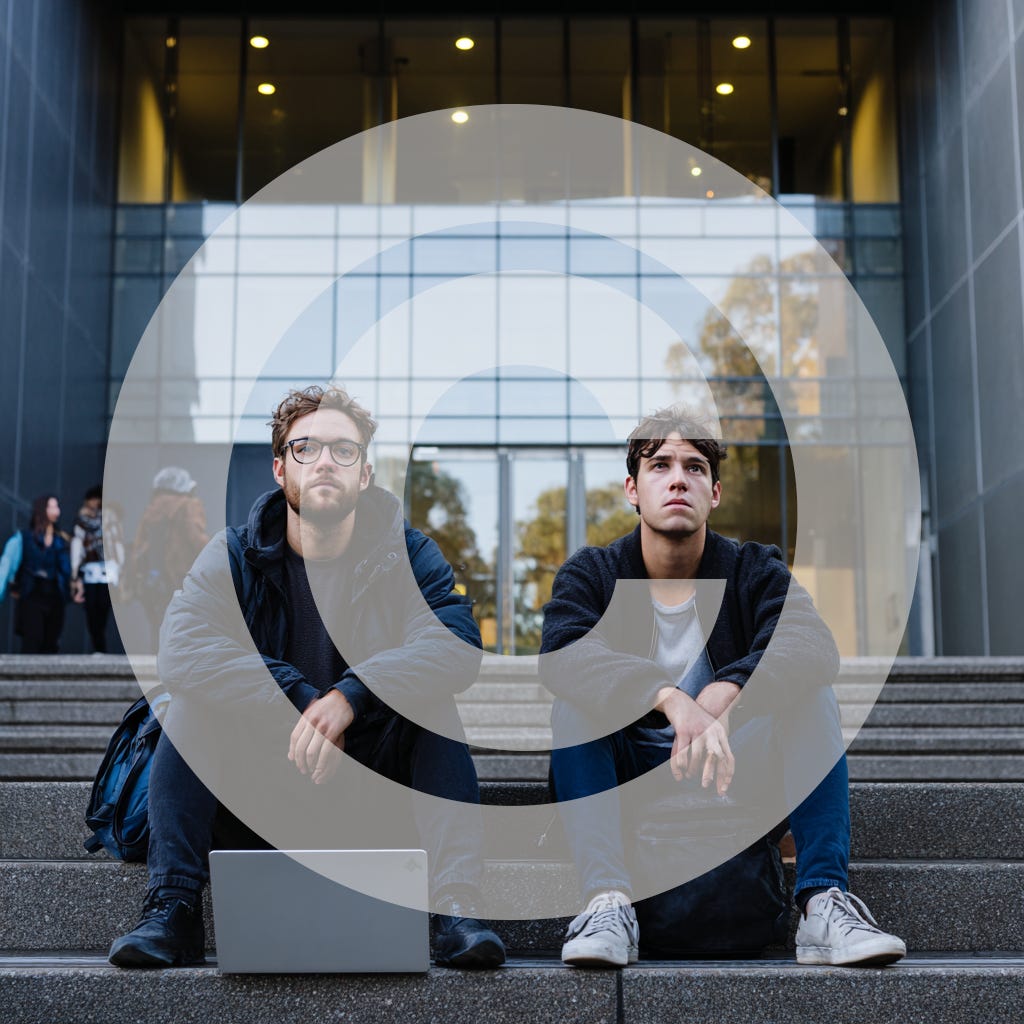
Student A and Student B start university on the same day.
They:
take the same course
have similar grades
work just as hard
have equally good ideas
Nothing about intelligence or effort separates them.
Student A
submits assignments only through the university portal
shows work privately to teachers first
waits until work is “perfect”
trusts the system will recognise them later
Their work:
lives inside institutional systems
is seen by staff, panels, visitors, partners
may be reused as examples, inspiration, or “impact”
but is rarely visible under their own name
After graduation:
their portfolio is thin
their ideas are hard to prove ownership of
industry connections are vague
they are told: “You need more experience.”
Student B
publishes a draft or concept before submission
puts their name and date on their ideas publicly
improves the work with teacher feedback afterward
treats the university as a place of learning, not ownership
Their work:
has a visible timeline
can be linked, shared, cited
attracts collaborators
builds a public trail of authorship
After graduation:
they have a living portfolio
their ideas are clearly theirs
industry can find them
they negotiate from strength
The Difference?
Not talent.
Not grades.
Not effort.
Order.
Student B put their name on the work first.
This Is Like Superannuation
Two people earn the same salary.
One understands super early contributions.
The other doesn’t.
Years later:
one has far more security
not because they worked harder
but because they started earlier
Authorship compounds the same way.
The One Rule That Changes Everything
Before you give your work to the institution, give it to yourself.
Publishing does not mean:
perfect
finished
professional
It means:
“This idea existed. I made it. On this date.”
Why This Matters Especially Now
AI accelerates reuse
digital systems erase memory
universities are under innovation pressure
students carry more financial risk
Silence no longer protects authorship.
Visibility does.
Two students.
Same starting line.
Different outcomes.
The difference isn’t who you are —
it’s whether your name got there first.
© your work. See your future.
Related: AI Creator Licenses


